Date: September 3rd - October 3rd, 2026. For more information, click here.
Food has always been an indispensable part of our daily lives. In the past, people around the world developed distinct food cultures based on what their local environment could provide. These traditions grew over centuries and became deeply connected to cultural identity. However, during the twentieth century, industrialization and globalization dramatically transformed the way food was produced, distributed, and consumed.
In recent decades, globalization and the evolution of food supply chains have continued to change what and how we eat – whether in São Paulo, Tokyo, or New York City.
For this Summer 2026 exhibition, I have selected a group of works that explore the relationship between food and my own life journey, reflecting the different cultures, memories, and places that have shaped my experiences.
Landscapes of Appetite by Kenta Ichinose, Curator, GOCA by Garde.
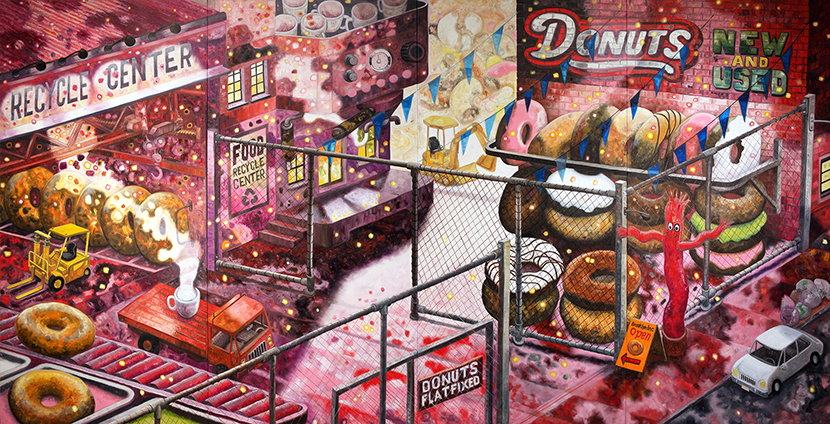
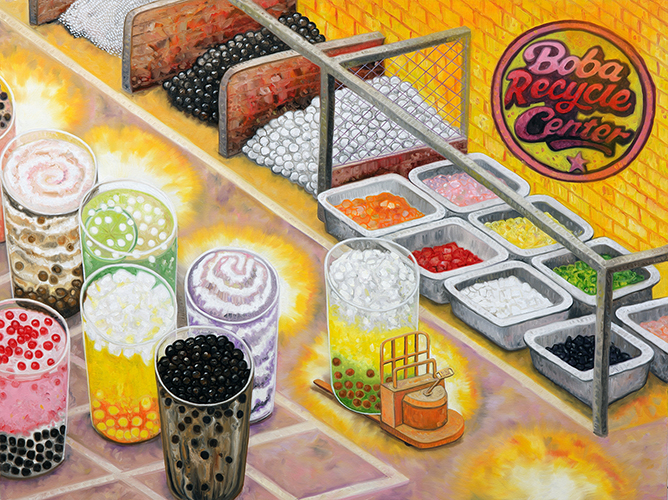
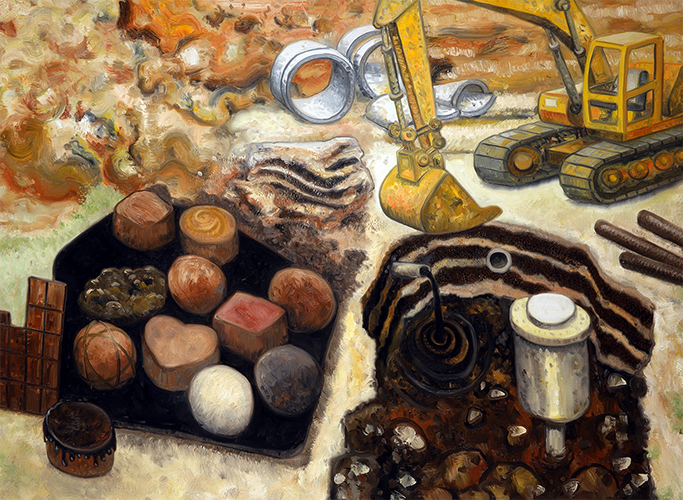
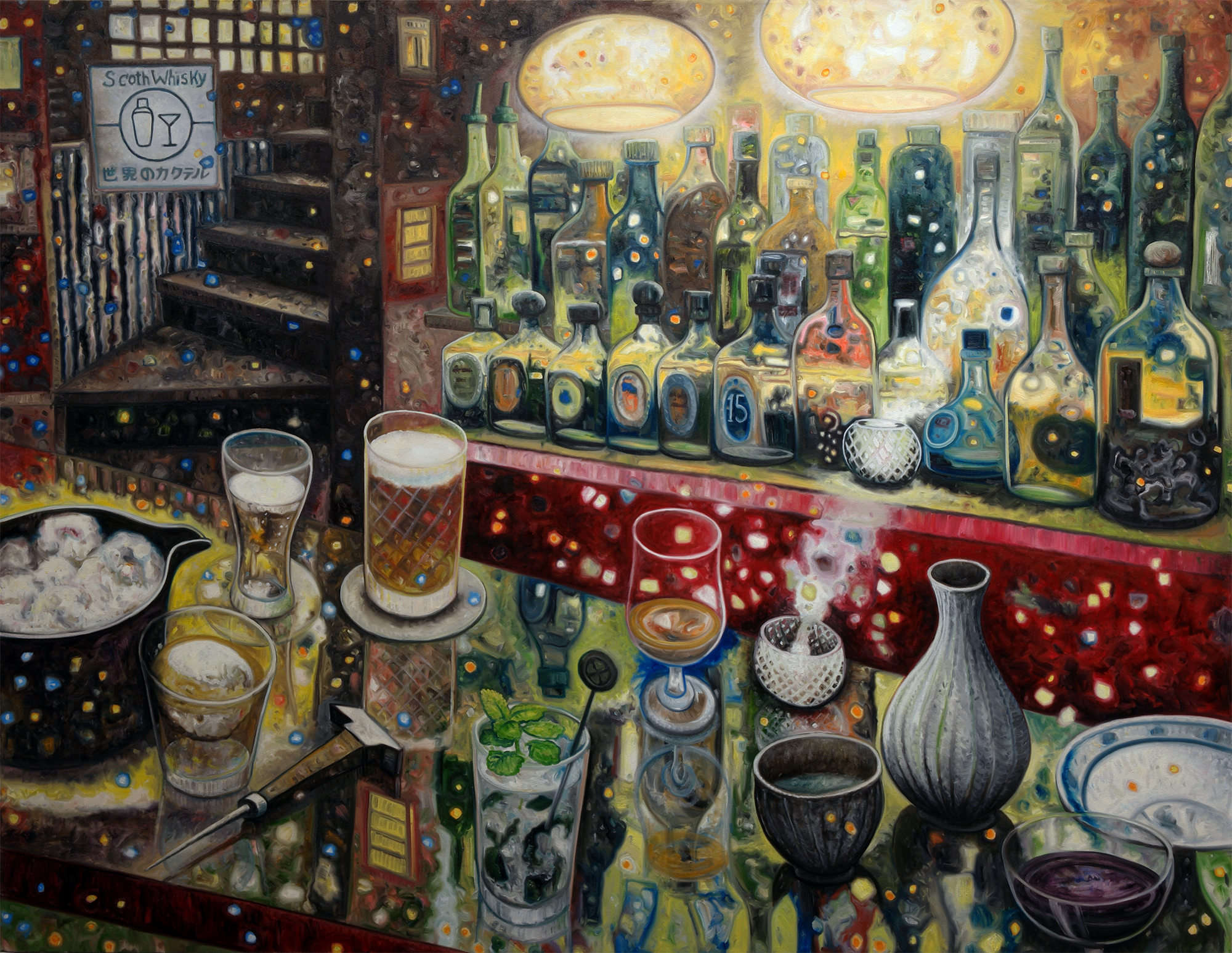
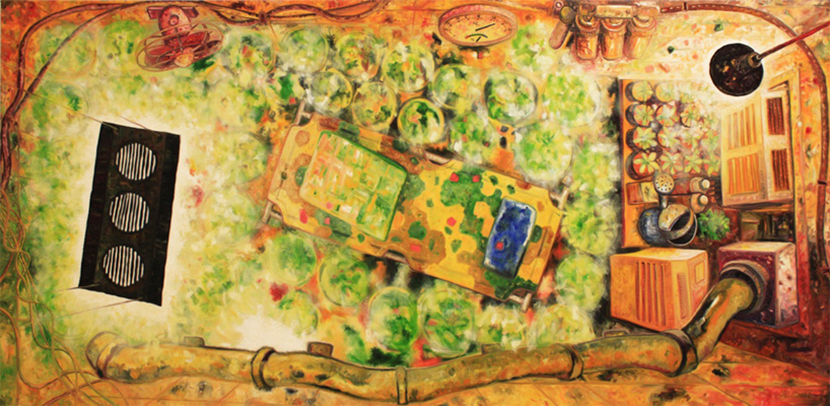
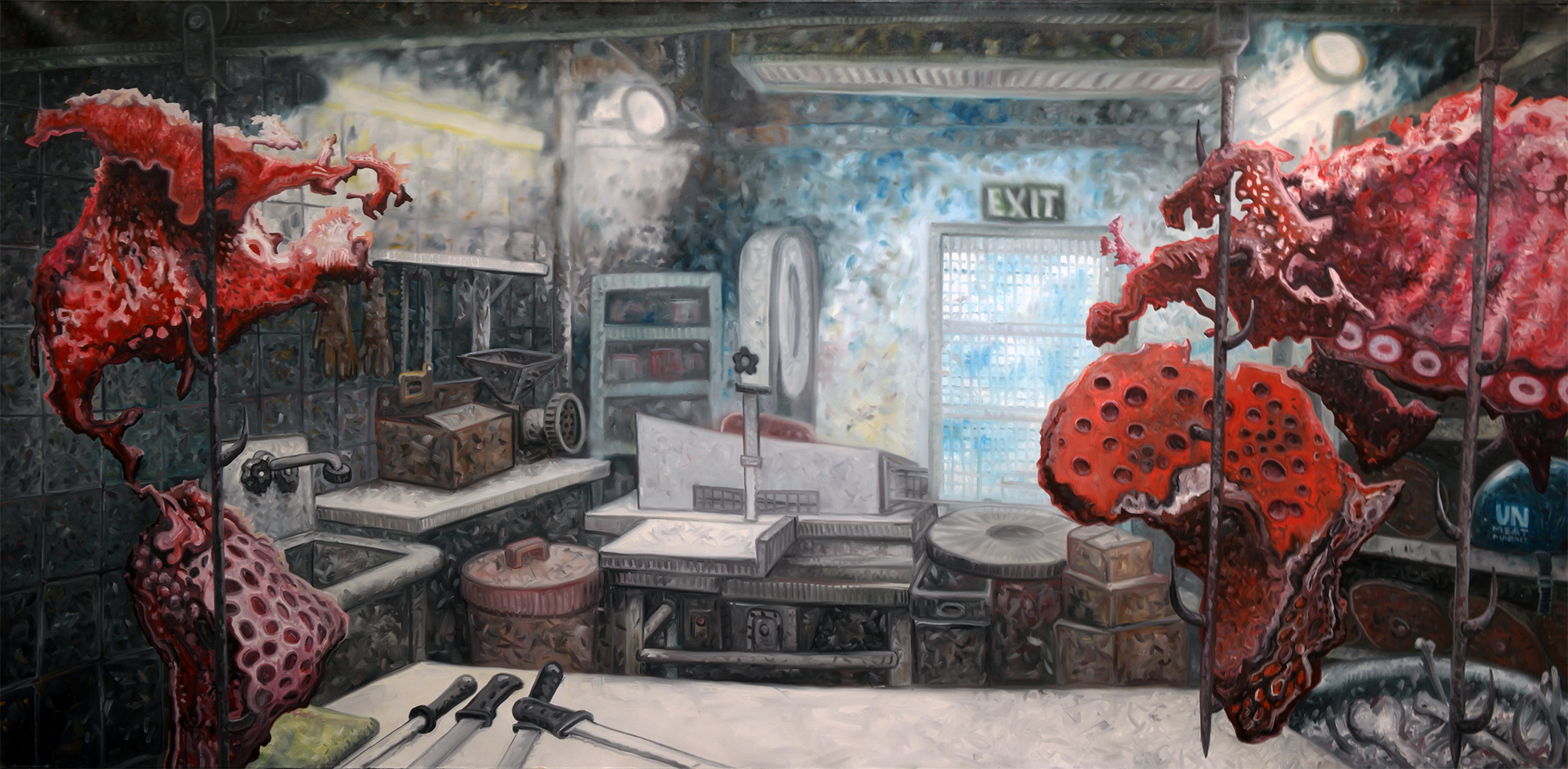
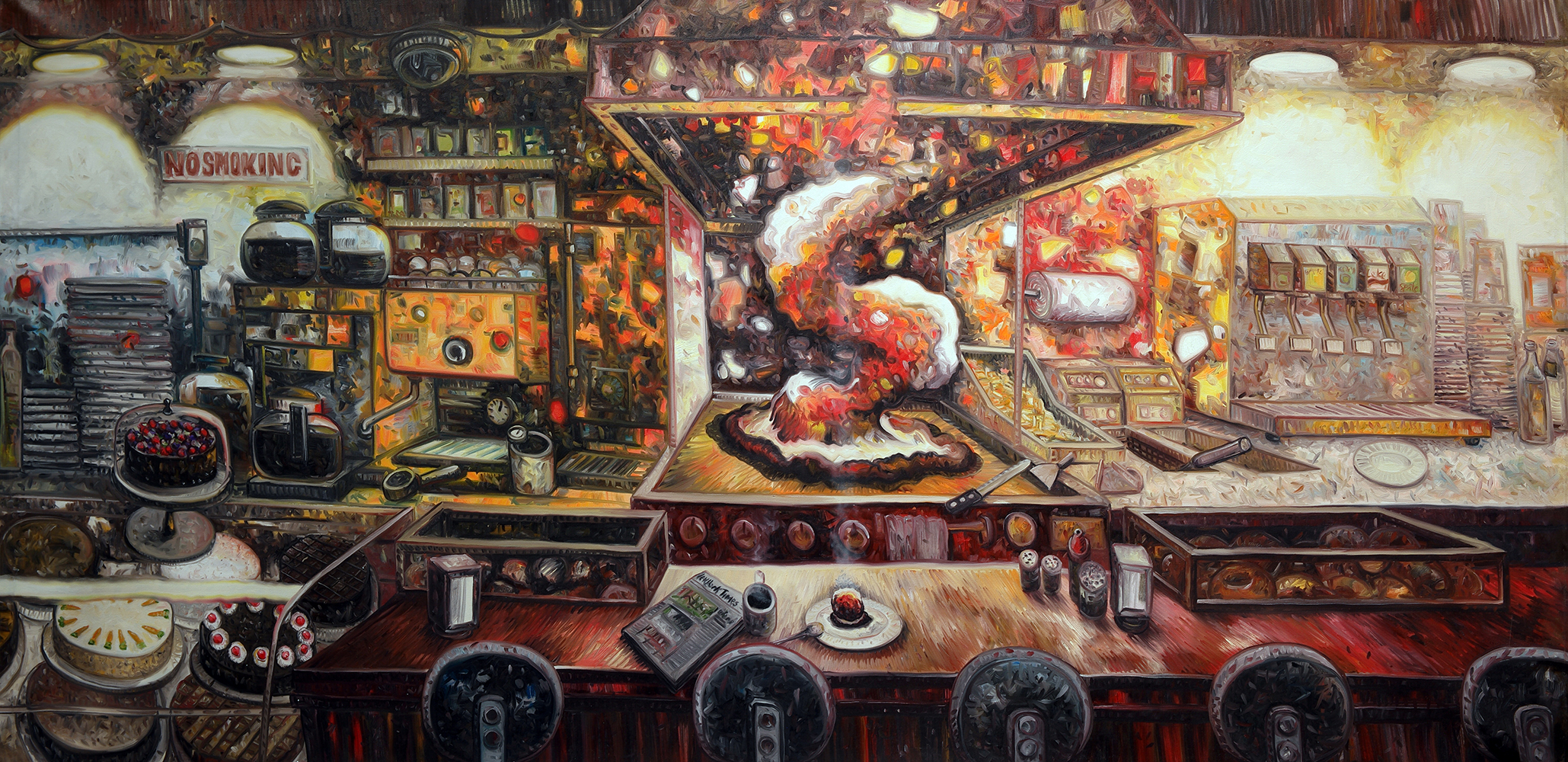
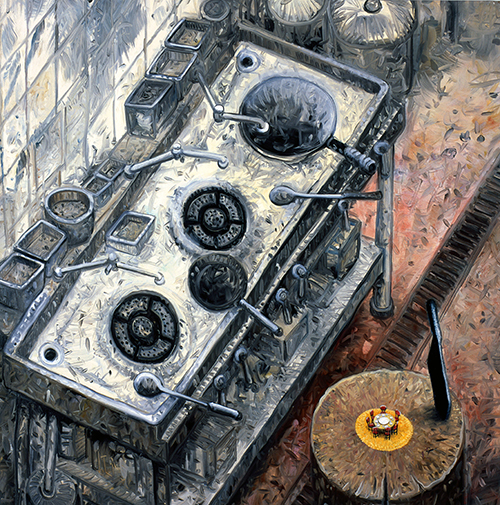
Nothing is closer to us than food, and nothing more remote. In the moment it reaches the mouth, it becomes an intensely private sensation. Yet behind every bite stretches a chain too vast to survey – land, water, labor, fuel, logistics, capital, desire. What Oscar Oiwa has painted is less food itself than this distance, at once psychic and physical, that comes into view only through food. On his canvases, familiar foods – doughnuts filling a display case, meat hanging on hooks, sweet fields running to the horizon – multiply, swell, and finally exceed human scale. They are still lifes of food that are also landscapes, cityscapes, and portraits of the immense system we have built.
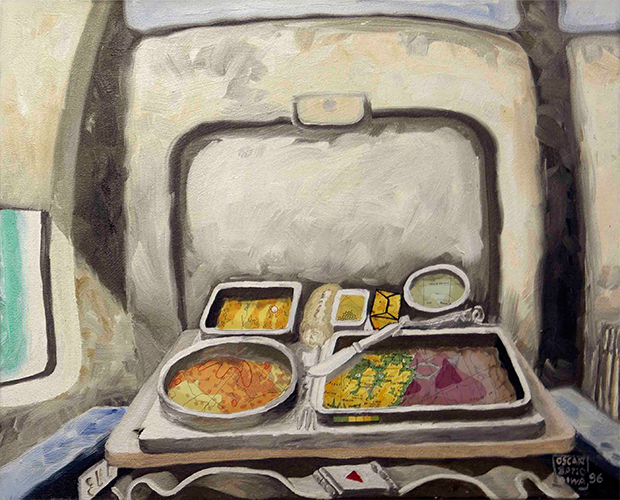
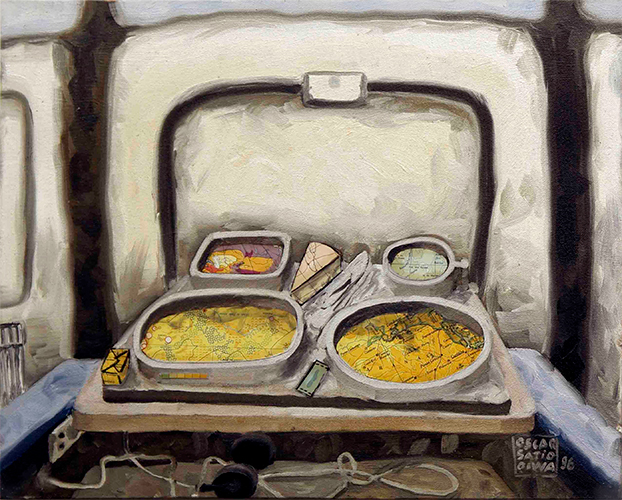
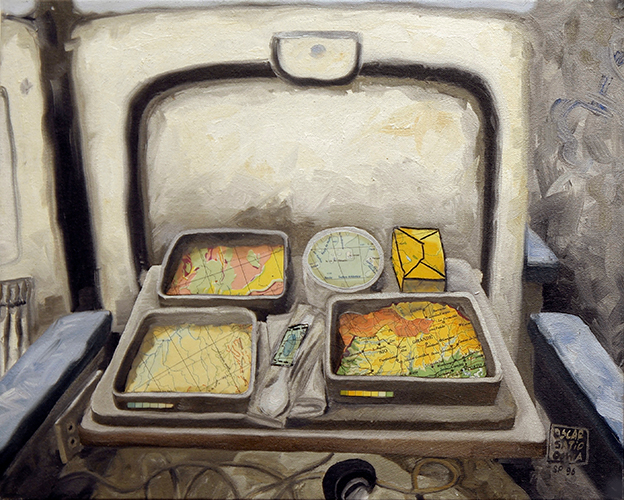
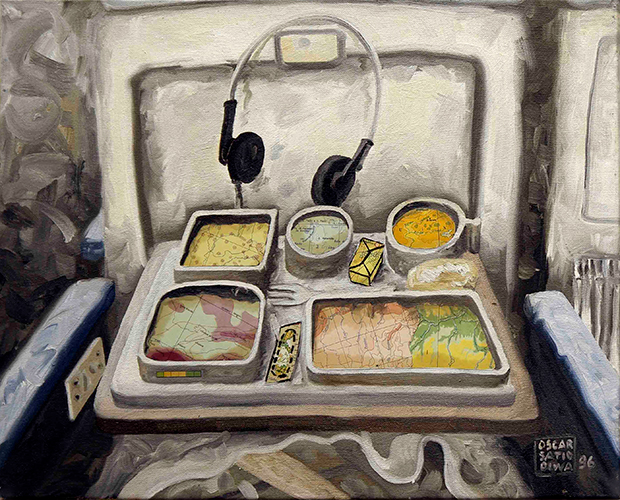
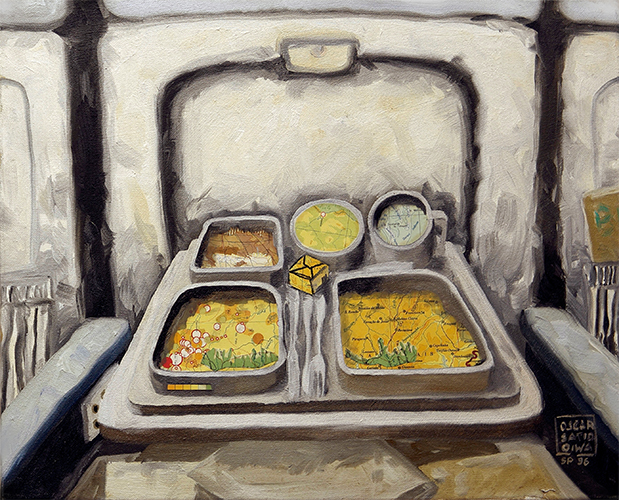
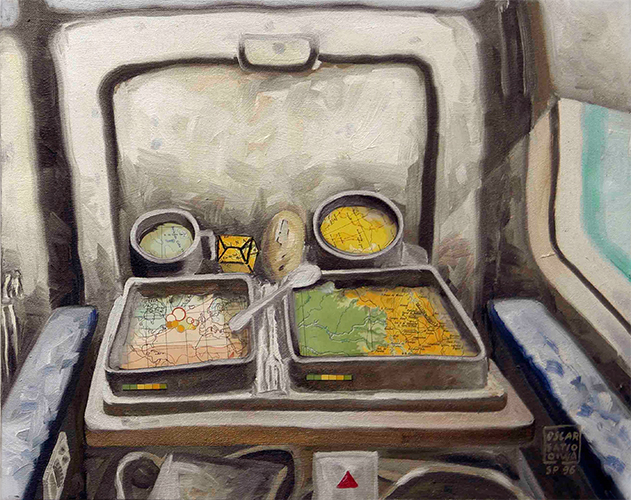
In the eighteenth century, Burke described the intimacy of terror and pleasure in the sublime, and Kant located it in the imagination faltering before magnitudes and forces it cannot grasp. Ever since, the sublime has named experience that exceeds the human measure. The cultural historian David E. Nye traced how, in modern America, that experience migrated to canals, railroads, bridges, skyscrapers, and dams – and on to atomic tests and the space program – a lineage he called the technological sublime. Oiwa stands a step beyond this line. If Thiebaud transformed the bakery counter into an order of memory and painterly pleasure, and Warhol brought the logic of the commodity and mechanical repetition into painting, Oiwa extends that repetition to the scale of landscape. What he paints is not the individual commodity alone. It is the network of production and consumption that we have created and can no longer comprehend; the endless supply of choices; the appetite that manufactures a new lack with every satisfaction. And he finds this totality in the middle of ordinary life – a doughnut-shop display, an airport meal, a meat market – with an architect’s aerial eye. Tellingly, Donut’s Shop began with an ordinary tire shop in Brooklyn: stacked tires turned into doughnuts, the repetition of the city becoming the repetition of food.
Read in a Derridean sense, “ supplemental” here means something more than mere addition. Sugar, packaging, advertising, branding, transport, imagery – something is forever being added to what we eat. But to supplement a thing is to confess that it was lacking. The additions that appear to complete our abundance expose, at the same time, what has been severed from it: land, season, labor, particular memory, and limit itself. The supplemental sublime is a paradox – an excess that conceals a lack even as it proves the lack exists.
Oiwa was born in São Paulo in 1965 to parents who had emigrated from Japan. Japanese migration to Brazil began in 1908, much of it bound for the coffee plantations; today some 2.7 million people of Japanese descent live in Brazil, the largest such community outside Japan. This history should not be mistaken for the origin of the work. But a history in which people and food cultures crossed borders through labor and trade lends a particular depth to Oiwa’s way of seeing food as personal memory and planetary system at once.
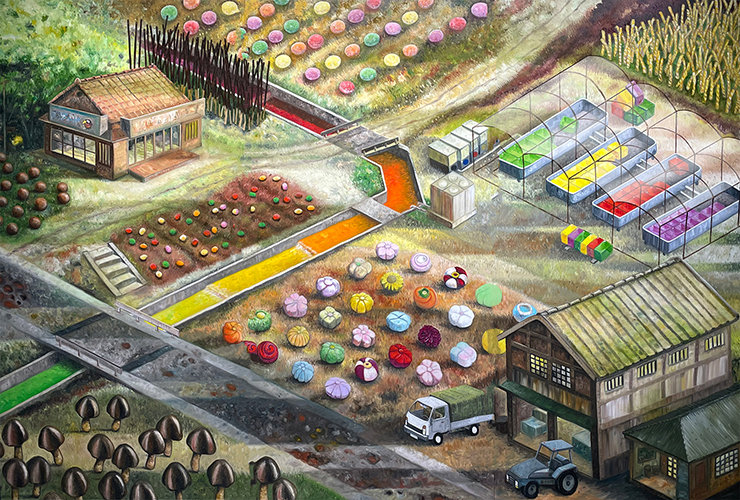
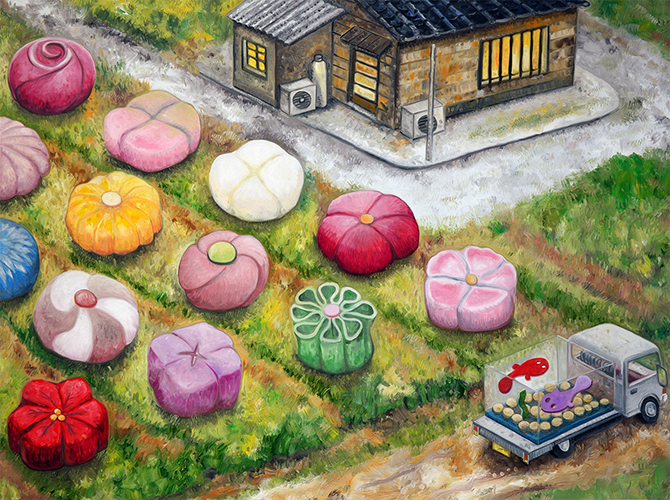
Trained as an architect at the University of São, Oiwa made Tokyo his base for a decade from 1991 and, following a Guggenheim Fellowship in 2001, has lived in New York since 2002. Brazil, Japan, and the United States are not parallel cultural attributes within him. They are multiple vantage points – each a place from which to regard another. The overview of someone trained in architecture, and the sense of distance of someone who has moved from land to land: with both, Oiwa grasps the structures of city, distribution, and society behind each individual food. Yet his work does not settle into nostalgia for a lost “pure ” food culture. Cultures travel, mix, get translated, become commodities at times – and make new memories as they go. The fields of Candy Farm, running to the horizon, are planted with the sweets of the Japanese convenience store – Pocky, Choco Ball, Kinoko no Yama – and at their center stands wagashi, traditional Japanese confectionery. Mass– produced sweetness and a particular tradition grow from the same soil. What Oiwa paints is neither a simple story in praise of that change nor a diagram drawn up to indict it, but a way of holding the pleasure and the unease together on a single canvas. What he is painting is human karma.
Spanning work from 1996 to 2026, this exhibition is not a retrospective that tidies the past. It is an observatory with a long axis of time, showing how a single subject – food – has registered the changes of the world across thirty years. And the observation has never been more urgent. The pandemic exposed the fragility of food supply chains; in March 2022, the FAO Food Price Index reached its highest level since the series began in 1990. The smartphone screen has become the doorway to the table, and climate change has turned “what can be grown, where, and for how long ” into an everyday question. The unsurveyable chain Oiwa has been painting is now a reality everyone feels on the skin. New York, where the cuisines of the world can be crossed within a few blocks, is also the inevitable place to pose the question. In a city where every culture seems within reach, abundance and homogenization, connection and disconnection, freedom of choice and dependence on the system all sit at the same table.
Oiwa’s paintings do not set out to teach us how to consume correctly. He is, himself, a man who loves to cook, and a painter who has never doubted the pleasure of eating does not produce diagrams of indictment. His mischievous humor disarms us, beauty holds the gaze, and at the end there remains a small disquiet that will not be explained away. After leaving the gallery, the shop windows, the delivery trucks, the next plate you raise to your lips will look slightly different than before.
What we are watching here is not only what the world feeds us. It is the world we ourselves keep feeding.